Common Mistakes When Storing Wheat Berries and Flour at Home
A practical home storage guide to wheat berries and flour — moisture control, airtight containers, pest...

Saturday morning at the market, and there is a stall with three sacks of grain and a hand-lettered sign that says “wheat berries.” One sack is pale gold, one is amber, one holds small dark kernels you do not quite recognise. The grower is busy with someone buying tomatoes, and you have about ninety seconds to decide whether any of it is worth carrying home.
Whole wheat berries are durable, but they are not immune to time. Grain that spent two summers in a hot shed, or came from a bin that took on damp in June, can still look perfectly fine from the top of the sack and taste flat or musty a year later. These ten questions are the ones worth asking before you pay.
“Wheat berries” is not one ingredient. Hard red winter or spring wheat, with its higher protein, is what you want for a chewy sourdough or a sturdy sandwich loaf. Soft white wheat makes tender biscuits, cakes and pastries. Durum is for pasta. Older types such as einkorn, emmer and spelt behave differently again — they absorb water in their own way and often want gentler handling. Ask the grower what they bake or cook with that particular sack. Someone who mills at home will have an opinion within seconds, and that opinion tells you more than any sign.
Then ask when it was harvested. Fresh grain from the past season is the safest bet; last year’s crop can still be excellent if it was stored well, but it needs a closer look and a closer sniff. A farm name and a location you could drive to in twenty minutes is a good sign. Grain that arrived from somewhere unnamed, with no year attached, is a question mark.
A good lot looks like one thing: kernels of similar size and shape, all the same shade. Hard wheat should be a rich amber-red to bronze; soft white wheat runs from pale gold to cream. Watch for faded, chalky or greyish kernels, which point to weathering, and for a bag that is half plump kernels and half shrivelled ones, which suggests a blend or a poor job of cleaning. Mixed sizes are not a crime, but you should know what you are buying.
Pour a handful from palm to palm. It should run freely and leave your skin almost clean; grain that clumps or feels cool and damp is holding too much water. Bite a single kernel between your back teeth. Hard wheat should crack and shatter with resistance — it fights back a little. Soft wheat crushes more easily. A kernel that bends or flattens instead of breaking is a warning: grain stored above roughly the low teens in moisture percentage can develop mould long before it looks wrong. Good growers know their moisture figures and will tell you.
Cup a handful, breathe on it to warm the grain, and smell. Fresh wheat is faintly sweet, grassy, bready — clean. Then watch for the failures:
A useful bag tells you the variety, the crop year, the net weight, the farm and its location, and whether the grain is certified organic — if it is, ask which certifier; a genuine organic grower answers that instantly. Contact details matter too, because you will want to buy from the same lot again if it cooks well.
Then check the grain itself. Pour a cup into your palm and look closely for broken kernels and flour dust (a little is normal, a lot means handling damage and a shorter shelf life), chaff, straw and small stones, and stray seeds such as vetch or mustard. One more thing: dark purple-black lumps roughly the size of a rye grain are ergot, a fungal body that should never end up in food. If you see them, leave that bag and tell the grower — a good one will want to know.
Ask plainly: “Is this food-grade, and has it been treated with anything?” Grain sold as seed can be dressed with fungicides or insecticides and is not intended for the table. Most growers keep seed and food grain separate, but the question takes five seconds and no honest seller will take offence. It is also fair to ask how they handle insects in storage — some freeze grain, some use diatomaceous earth, some fumigate. You may be comfortable with any of those answers, but you should be the one deciding.
Where has the grain been since harvest? A cool, dry bin is ideal; a trailer in full sun is not. How long has it been in the bag you are holding, and has it been frozen along the way? Whole berries keep far longer than flour because the germ’s oils sit protected inside the kernel, but heat and moisture still reach them eventually.
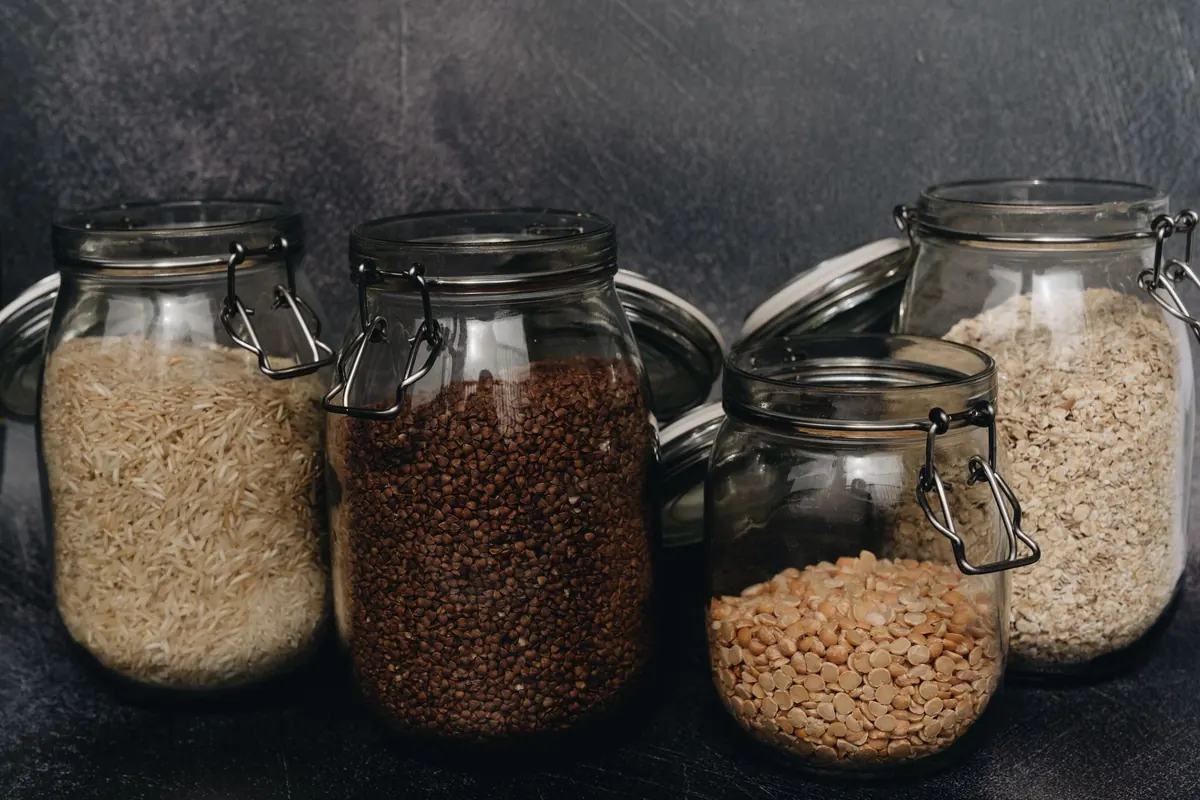
At home, decant into an airtight container and keep it cool and dark. If you buy more than you will grind in a few months, the freezer is your friend — just let the grain come to room temperature before milling so condensation does not gum up the works. Buy in amounts you will actually use. Two kilos of excellent grain is a better purchase than twenty kilos of something you tire of.
Buy a pound or two first. Simmer a cup of berries in plenty of water for forty-five minutes to an hour, until they are chewy but tender, or soak them overnight to shorten the cooking. Taste a spoonful plain, without oil or salt. Good grain is sweet, nutty and distinct, and it holds its shape. Flat, bitter or cardboard-like berries mean the grain is old or was stored badly, and no amount of seasoning will fix that.
Write the variety and the grower’s name in your phone while you are still at the stall. When you find a lot you love, go back for a larger quantity, ask the same storage questions again, and grind only what you will use in the next few weeks — whole wheat flour goes stale far faster than the berries it came from. One practical note: wheat berries contain gluten, so if you cook for someone with coeliac disease or a wheat allergy, take advice from a qualified clinician before working them into the rotation.
Photo: acekreations / Pixabay
A practical home storage guide to wheat berries and flour — moisture control, airtight containers, pest...
A practical look at how stone mills grind grain, why the flour comes out in so many particle sizes, and...
A same-day whole wheat focaccia with olive oil and rosemary — 80% hydration, folded rather than kneaded,...