Common Mistakes When Storing Wheat Berries and Flour at Home
A practical home storage guide to wheat berries and flour — moisture control, airtight containers, pest...

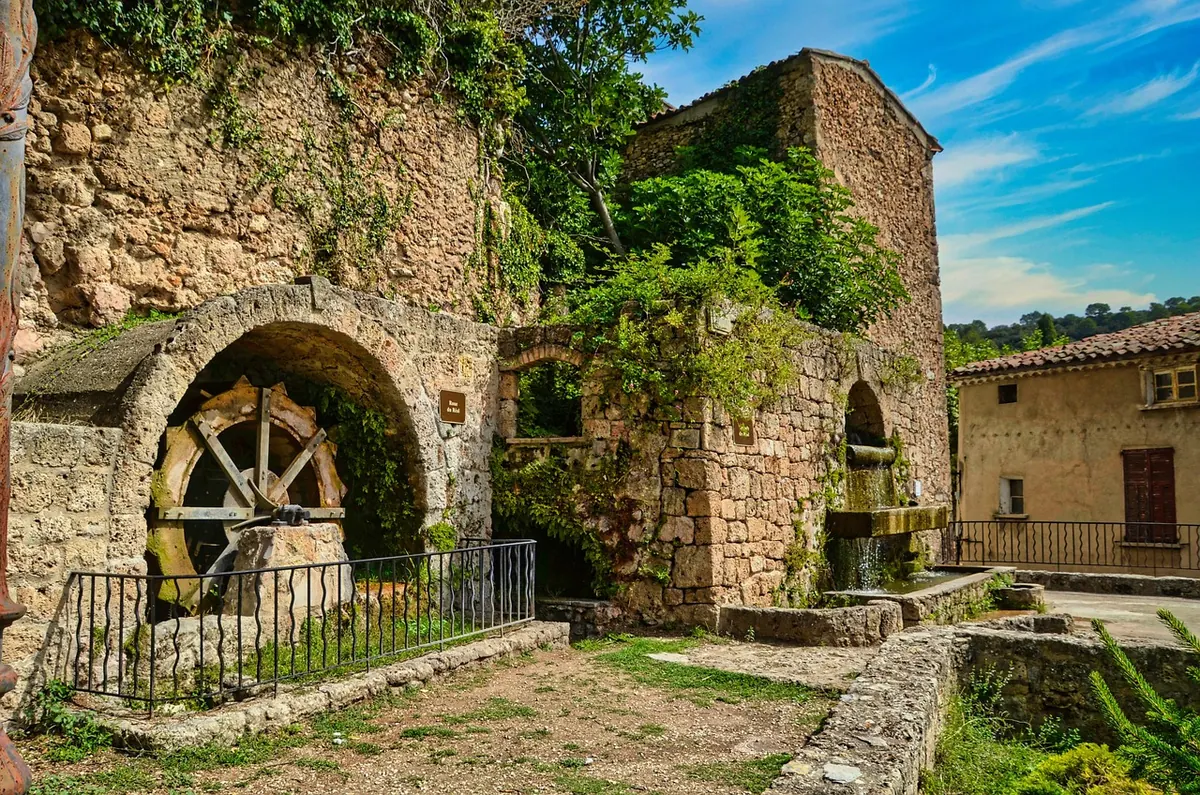
Stand at the spout of a working stone mill and the flour comes down in a soft curtain: barely warm, slightly damp, smelling of grain and chalk and something faintly sweet. Put a handful beside a bag of roller-milled white flour and the difference is obvious before you bake anything. One is fine as cornstarch and slips through your fingers without a trace. The other is a mixture — powder, grit, a few pale flakes of bran — and it clumps in your palm.
That physical difference is the whole story of stone-milled flour, and it is why a loaf made from it behaves in ways that surprise bakers who have only used supermarket flour. Nothing mysterious is happening. The stones simply break the grain differently, and the dough keeps a record of it.
A stone mill grinds grain between two stones, one turning against one stationary. Grain feeds in at the centre and travels outward along the grinding faces, getting progressively finer until it leaves at the rim as meal. The stones turn slowly compared with steel rollers or impact mills, so the flour stays cool — a point millers care about, because a hot grind drives off aroma and can damage the proteins that form gluten.
The other thing to understand is that a stone mill is a whole-grain machine. Grain goes in; meal comes out. The bran coat, the oily germ and the starchy endosperm are all there, mixed together, because the stones cannot separate them. If you want a lighter flour you sift afterwards.
A roller mill works the opposite way. Steel rollers crack the grain open and separate it stage by stage: bran flakes off first, then the germ, and the endosperm is reduced to a very even, very fine powder. That system gives millers precise control and a long shelf life, and it is why white flour is so consistent from bag to bag.
Neither method is moral. Stone milling is not automatically better — it is different, and the differences turn up in your mixing bowl.
Sift 500 g of stone-milled whole wheat through a fine sieve and weigh what stays behind. You will usually find a decent spoonful of coarse material — bran flakes, chunks of endosperm, a bit of germ. The flour that passes through is itself a blend of particle sizes, from dust-fine to gritty. Roller-milled white flour, by contrast, has a narrow range: nearly every particle is roughly the same tiny size.
That spread matters. Coarse particles do not pack tightly, wet slowly and sit in the dough as distinct specks. Fine particles hydrate almost instantly and disappear into the mass. A flour with a wide distribution is never evenly wetted at the moment you finish mixing; it keeps changing for the next hour.
This is behind the Italian habit of naming flours by extraction rather than by fineness. Sift stone-milled whole meal and you get a family of flours: integrale with everything in, then type 2 and type 1 as more of the coarse bran is taken out. A high-extraction flour of this kind — say 80 percent of the grain retained — behaves quite differently from a true wholemeal, even though both came off the same stones.
In a roller mill, bran comes away in flat flakes. Under stones it shatters, and shattered bran has edges. Large shards are the reason a wholemeal dough can look fine in the bowl and then tear at the surface during shaping: the fragments interrupt the gluten film, sometimes slicing through it as the dough stretches.
Fine bran causes a quieter problem. Ground to dust, it has an enormous surface area, so it grabs water and holds it, and it carries a good share of the grain's enzymes with it. Too much fine bran and the dough feels sticky and slack, then tightens unpredictably as the bran finally drinks.
One practical fix is a soaker. Pour boiling water over the coarsest portion of your flour — the part that stays in a coarse sieve — stir, cover and let it cool completely before mixing it into the dough. The heat softens the shards and pre-hydrates them so they stop competing with the gluten for water. Loaves made this way usually rise higher and slice more cleanly.
Stone-milled whole grain wants more water than white flour, and it wants it more slowly. Where a white country loaf might sit happily at 70 percent hydration, the same formula with stone-milled whole wheat often needs 78 to 82 percent before it feels right. Those figures are a starting point, not a rule — every mill grinds differently, and the wheat variety matters as much as the stones.
Expect the dough to confuse you at first. It may feel wet and slack at the end of mixing, then stiffen over the next hour as the bran absorbs its share. Give it another hour and active enzymes may loosen it again. Learn the feel of "ready" rather than trusting a clock.
A few adjustments do most of the work:
Whole grain brings the germ's oils, the bran's minerals and a much larger population of enzymes into the dough. That is a richer food supply for yeast and bacteria, which is why stone-milled whole wheat ferments noticeably faster than white flour at the same temperature and starter percentage. A dough that took five hours last week may be ready in three and a half. Watch it rather than the recipe.
The flavour follows from this. Freshly milled whole grain smells green and sweet and slightly nutty, and some of that survives baking as a long, warm finish behind the sourness. White flour tastes cleaner and sweeter by comparison — lovely in its own way, but it gives you less to work with.
There is a limit. Germ oil goes rancid, and rancid flour tastes bitter and dusty, a harsh note at the back of the throat that no amount of fermentation will hide.
Stone-milled whole grain flour is a perishable food. Buy it in small amounts — a kilo or two until you know how fast you bake — and smell it before you use it. Fresh flour smells of grain. Old flour smells of paper, crayons or nothing at all.
Store it sealed, cool and dark, and put anything you will not use within a few weeks in the freezer. Let it come to room temperature before mixing so it does not chill your dough.
Ask the mill or the shop what the extraction is, and whether the flour is wholemeal or sifted. That single question tells you more than the label's poetry about tradition. Then bake a small test loaf before committing a weekend to it: keep your usual formula, raise the water slightly, shorten your bulk fermentation by roughly a fifth, and write down what happened.
Do that twice and you will have your own numbers — your mill, your wheat, your kitchen. From then on the flour stops being an unknown quantity and becomes a tool you can reach for deliberately: coarse and full-flavoured for a rustic country loaf, sifted and finer for sandwich bread, wholemeal for anything where you want the grain to be heard.
Photo: lecreusois / Pixabay
A practical home storage guide to wheat berries and flour — moisture control, airtight containers, pest...
A same-day whole wheat focaccia with olive oil and rosemary — 80% hydration, folded rather than kneaded,...
A hands-on guide to making orecchiette from scratch: mixing firm durum dough, rolling even ropes, and...