What Is Stone-Milled Flour and How Does It Change Bread?
A practical look at how stone mills grind grain, why the flour comes out in so many particle sizes, and...

Wheat keeps. That is the whole appeal of it — a hard little berry that can sit in a dry room for a year or more and still mill into something worth eating. But that promise comes with conditions, and most of the disappointing flour in home kitchens went wrong long before anyone opened the bag. A little moisture, a warm cupboard, a paper sack folded over on itself, and the grain starts to slip: flavour turns flat and soapy, moths find the seam, and a purchase that should have lasted until spring is finished by February.
The good news is that this is one of the few parts of wheat culture you can control completely. A hygrometer, a decent jar, a freezer with some room in it, and a strip of labelling tape will do more for your baking than most equipment you could buy.
Wheat berries are hygroscopic, which is a polite way of saying they drink the air around them. Grain that leaves the field dry will slowly pick up moisture in a steamy kitchen, and once the internal moisture climbs past roughly the twelve percent mark, you are no longer storing grain — you are hosting it.
Two cheap habits make this visible. First, put a small digital hygrometer in the cupboard or pantry where you keep your wheat and glance at it weekly. If relative humidity sits above about sixty percent for long stretches, the grain needs a tighter container or a drier room. Second, use the old bite test: a sound wheat berry snaps cleanly between your teeth. A berry that dents or feels spongy is holding water you do not want in there.
Temperature swings matter as much as humidity. Move a cold bucket from a garage into a warm kitchen and condensation forms on the inside of the lid, directly above the grain. Let any sealed container come to room temperature for a full day before you open it. Same rule after the freezer.
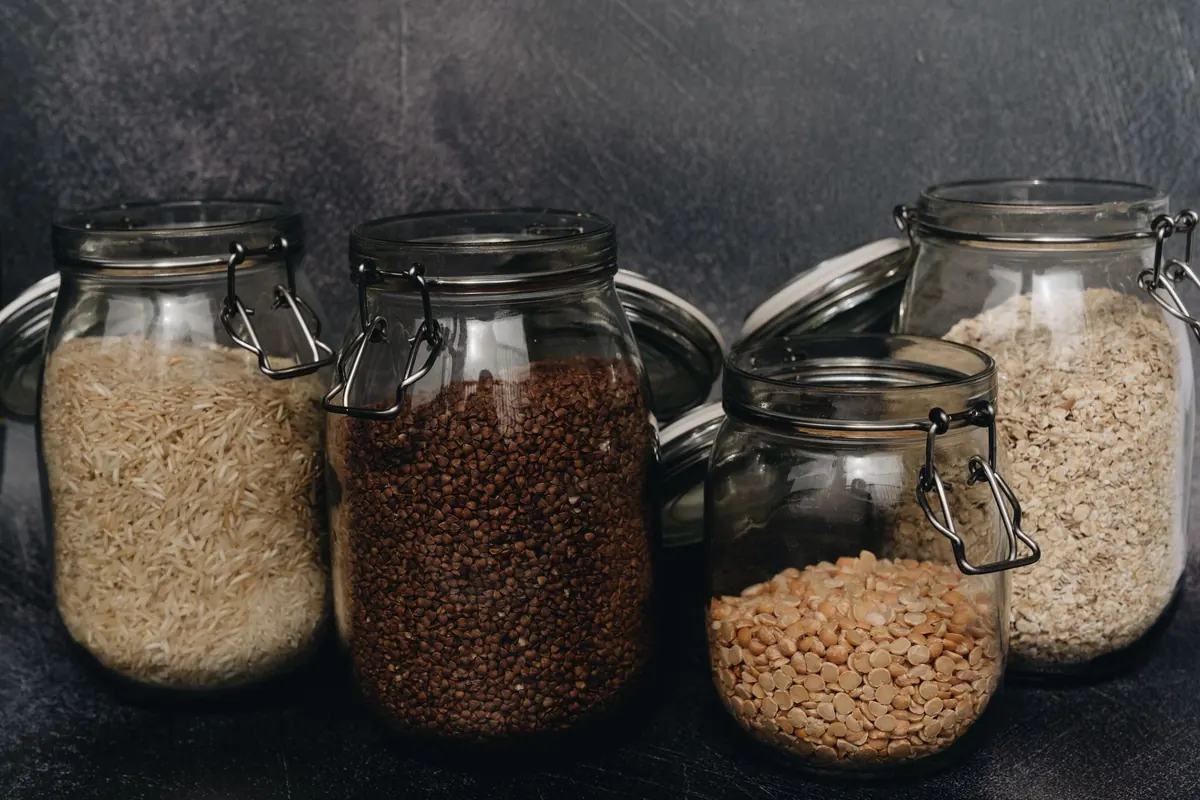
Paper sacks, thin produce bags, decorative crocks and open bins all share the same flaw: air moves through or past them freely. What you want is a container that closes with a gasket and holds its seal, in a material that does not carry odours.
Decant your grain out of the shop bag rather than dropping the bag in whole; bags trap air and hide pests. Leave a little headspace, label both the lid and the side, and keep the container out of direct light. Grain also absorbs smells, so move it away from onions, spices, detergents and the space above the stove.
Pantry moths and weevils usually come home with the grain, already inside the bag as eggs too small to notice. The infestation appears three weeks later, which is why people blame their storage rather than their supplier.
The reliable fix is the freezer. Portion your purchase into sealed bags and freeze at roughly minus eighteen degrees Celsius for at least seventy-two hours, or a full week for large volumes. Let the bags come back to room temperature while still sealed, then transfer to your containers. This interrupts the life cycle before it starts.
Skip the folklore. Bay leaves and cloves smell pleasant and do not stop an infestation. What does work is cleaning: vacuum the corners and shelf edges of the cupboard, check the ceiling of the cabinet for the small white cocoons moth larvae leave behind, and wipe surfaces with vinegar. Keep birdseed, pet food and old bags of oats well away from your wheat — they are the usual staging ground.
Whole wheat flour carries the germ, and the germ carries oil. Once you mill or open a bag, that oil begins reacting with oxygen, and the result is the smell people describe as old crayons, putty or soap. It is not a matter of stale flavour you can bake around. Rancid flour tastes bitter in the loaf, and no amount of sugar hides it.
Three things slow the clock: cold, darkness and no air. Keep whole grain flour in the freezer if you will not use it within a month or two, and store working quantities in a sealed jar in the cupboard, away from the light. If you mill at home, grind only what you will bake with in the next two or three weeks; a mill is a wonderful thing, but it does not extend shelf life. Oxygen absorbers help in sealed rigid containers, but they are a poor fit for soft bags and unnecessary for grain you will rotate through in a season.
This is the point home bakers most often miss: the whole berry and the flour it becomes are two different storage problems. The bran and the intact outer layer protect the germ, so berries hold far longer. Grinding removes that protection and multiplies the surface area exposed to air. Treat these as rough working ranges rather than guarantees — your climate, container and kitchen will shift them:
If grain or flour smells musty, shows patches of mould or clumps together, throw it out. Mould in stored grain can produce toxins that ordinary cooking does not destroy, and it is not worth the risk to salvage a bag.
A beautiful storage system that nobody rotates is just a slower way to waste food. Write the date and the variety on every container — "Khorasan, milled 14 March" tells you at a glance what to use next. Keep a small jar of flour in the kitchen and refill it from the freezer or the bulk bucket, so you are not opening the main supply every day and letting humid air in.
Be honest about volume. Most households overbuy grain in autumn and spend the following summer baking through it out of duty. A family that bakes two loaves a week will use roughly a sack of berries a year; if you cannot picture using your stash before next harvest, buy less and buy again.
None of this takes much time, and all of it compounds. Grain stored well tastes sweet and grassy a year after you bought it — which is, after all, the reason to keep wheat in the pantry in the first place.
Photo: alleksana / Pexels
A practical look at how stone mills grind grain, why the flour comes out in so many particle sizes, and...
A same-day whole wheat focaccia with olive oil and rosemary — 80% hydration, folded rather than kneaded,...
A hands-on guide to making orecchiette from scratch: mixing firm durum dough, rolling even ropes, and...