Common Mistakes When Storing Wheat Berries and Flour at Home
A practical home storage guide to wheat berries and flour — moisture control, airtight containers, pest...

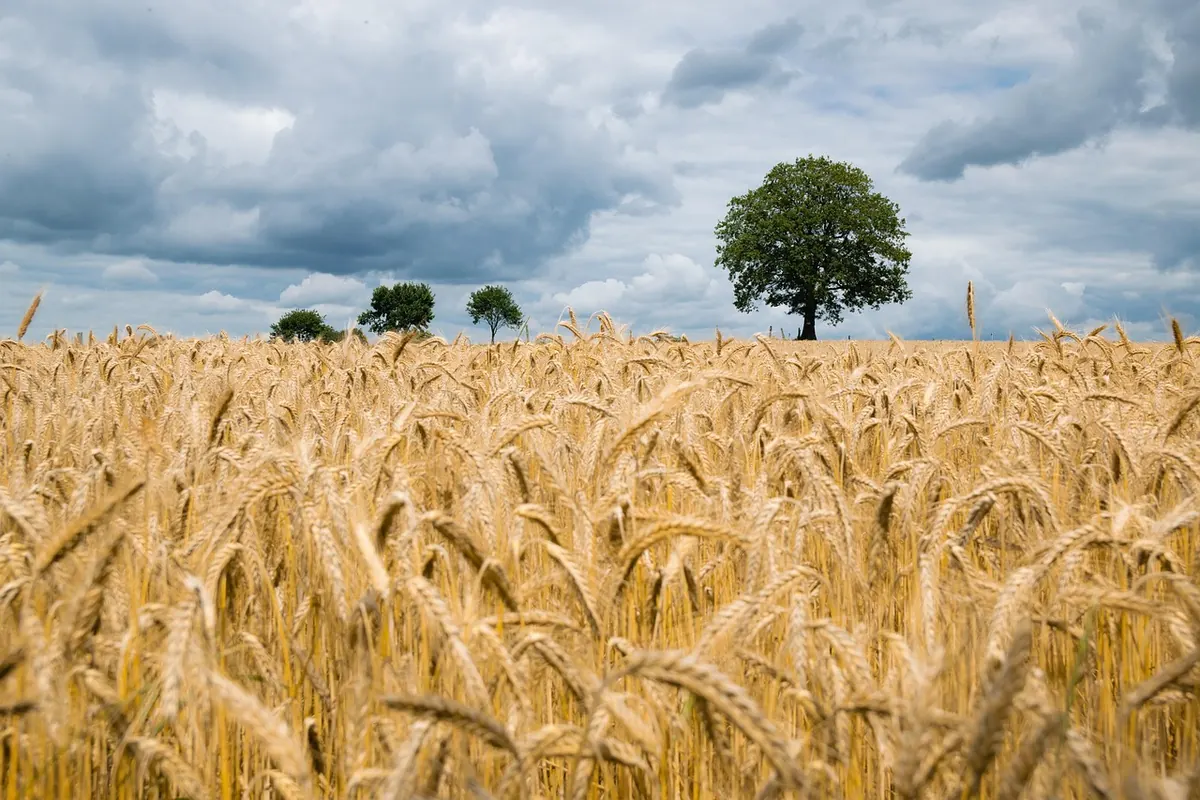
The last weeks of summer announce themselves quietly. A field that was green in June now runs gold at the edges and paler through the middle, and the heads bend a little further each morning. If you have grown wheat for a few seasons, you feel the pressure before any meter says a word: the crop is nearly ready, and the weather has opinions about when.
Harvest at the end of summer is mostly a decision-making job. Driving the combine is the easy part. What decides your yield and your price is the run of small judgments before the header goes in — the kernel under your thumbnail, the moisture reading that keeps shifting, the forecast that changes on Thursday. Here is what to watch, roughly in the order it matters.
Ripe wheat does not arrive on a date. Variety, planting date, heat, soil depth and how much water the field caught in July all move the finish line around. Two fields on the same farm, planted a week apart, can be eight days apart at harvest. Trust the plant over the calendar.
Walk into the middle of the field and pull a head from a few plants. Roll it between your palms until the grain works free of the glumes, then press a kernel with your thumbnail. At soft dough it smears white. At hard dough it dents and holds the shape of your nail. Dead ripe grain is hard enough to crack between your teeth, and your thumbnail leaves almost no mark. That progression, not the colour of the field from the road, is the real signal.
Look at the neck too — the short section of stem just below the head. It goes from green to yellow to a dry brown, and the head begins to nod as it does. When the neck is brown and the grain is hard, you are close. When the glumes start to open and you can see grain sitting loose in the head, you have moved past close and into the window where losses begin.
One sample from the headland will lie to you. Headlands dry first, low spots hold moisture, and heavier soil can run two or three points wetter than the sandier ground thirty metres away. Take samples from several places, hand-thresh them, blow off the chaff, and read a clean sample rather than a handful of stems and awns.
Grain temperature affects the reading, so a sample pulled at two in the afternoon is not the same grain you will be storing at midnight. Many growers aim to finish at roughly 13 to 14 percent moisture for safe storage, adjusting for their own climate and how long the grain will sit. Below that is comfortable; above it, you are buying drying capacity or taking a risk. If you plan to sell straight off the field, check what your buyer expects before you decide the crop is finished.
Every day past full ripeness costs you something. Dry, dead-ripe wheat holds its grain in the head less tightly than most people expect. A hot afternoon wind, a light shower followed by strong sun, or simply a few extra days of standing can put grain on the ground before the header ever reaches it. That is shattering, and it is quiet — you notice it on the ground behind the machine, not in the forecast.
Rain is the other clock. A wet spell on ripe standing wheat invites pre-harvest sprouting in the head, which matters beyond weight: millers watch for it because it affects how the flour performs. Long damp periods also darken and weather the grain and invite ear diseases. Lodged crops are worse in every respect — slower to dry, harder to cut, more likely to sprout where the head touches the soil.
So set a harvest order and be willing to change it. The most advanced field, the most exposed field, and the field with the weakest straw go first. If a front is coming and you cannot cut everything, cut what will lose the most by waiting.
Before you commit a field to the schedule, walk it properly. An hour on foot saves a day of trouble.
Dew runs the harvest day. Early morning wheat is tough, and tough straw threshes badly and takes more fuel to push through. Most cutting starts once the heads have dried, often late morning, and the best work happens in the afternoon when the crop is at its driest.
That said, dry grain cracks more easily. Set drum speed and fan to thresh cleanly without splitting kernels, then check behind the machine rather than trusting the cab. Two minutes spent looking at the ground behind the straw walkers tells you more than any monitor. If you see intact heads, the machine is losing grain over the back; if you see cracked kernels, you are being too aggressive.
Grain that comes off at 16 percent or higher needs attention the same day. Do not let a load sit in the truck overnight while you finish another field. Dry it, or move air through it, and keep checking. Chaff and fines concentrate moisture, so clean grain stores better than dirty grain.
Once it is in the bin, the job is not over. Check temperature and smell regularly for the first few weeks, and keep a log of what went in where and at what moisture, so a problem in November can be traced to a field in August.
Run through the short version. Test grain hardness in the middle of the field, not the headland. Take moisture samples from several spots with a calibrated meter. Check the forecast and decide your harvest order. Walk the field for shattering, lodging, green patches and obstacles. Cut in the afternoon when the crop is dry, and look behind the machine before you trust it. Get any wet grain dried or aerated the same day.
None of this is complicated. It is just easy to skip when the weather is holding and the field looks ready from the road. The growers who finish harvest with clean grain in the bin and nothing shattered on the ground are rarely the ones with the biggest machines. They are the ones who walked the field one more time.
Photo: KaiPilger / Pixabay
A practical home storage guide to wheat berries and flour — moisture control, airtight containers, pest...
A practical look at how stone mills grind grain, why the flour comes out in so many particle sizes, and...
A same-day whole wheat focaccia with olive oil and rosemary — 80% hydration, folded rather than kneaded,...