Common Mistakes When Storing Wheat Berries and Flour at Home
A practical home storage guide to wheat berries and flour — moisture control, airtight containers, pest...

Italian pasta is not a single dough rolled into a hundred whims. In the south, and on the islands, durum wheat semolina is the everyday flour: coarse, nutty, and strong enough to hold a ridge, a curl, or a hollow. Those shapes did not appear for decoration. They grew around local vegetables, ragù, shellfish, and the tools a cook had within reach. This guide follows that logic from Puglia to Abruzzo, with notes on which sauces flatter each form.
Durum wheat is a hard wheat, milled into semolina that feels like fine sand rather than powder. Mixed with water, it makes a firm, elastic dough that can be rolled by hand or pushed through bronze dies. The surface stays slightly rough, and that roughness matters: it catches sauce the way a worn wooden spoon catches stew. Fresh southern pasta is often just semolina and water; dried pasta is the same dough taken through extrusion and slow drying. Egg pasta, common in the north, is a different tradition, usually made with softer wheat and eggs. It is wonderful, but it is not the subject here.
Northern cooks use durum wheat too, often in dried pasta from the pantry, but their fresh pasta canon leans toward egg dough. Keep the distinction in mind when you read menus: pasta fresca may mean egg ribbons, while pasta di semola points to durum.
Shape is a sauce decision. Long, rough shapes suit thin sauces that need surface to cling to. Short cups and tubes trap chunkier sauces. Ridges and curls hold oil, cheese, and starchy water in suspension. Before you choose a shape, think about the weight of what will go on top.
Puglia is the place to watch a cook’s thumb do the work. Orecchiette, “little ears,” are made by dragging a small piece of semolina dough across a board or a special paddle, leaving a concave cup with a rough outside. Cavatelli are close cousins, rolled and hollowed into short shells. Both shapes are built to scoop. A thin tomato sauce will slide off; a sauce with body will settle into the hollow.
The classic pairing is orecchiette with cime di rapa, anchovy, garlic, chilli, and olive oil. The bitter greens need the cup to hold them, and the rough surface grabs the oil. Cavatelli works well with tomato and ricotta, or with a simple broccoli sauce finished with toasted breadcrumbs. In Puglia, breadcrumbs are not a garnish; they are a way to add texture without cheese.
Cook orecchiette until al dente, then finish it in the pan with a spoonful of pasta water. The water helps the sauce coat the cups instead of pooling at the bottom. Do not drown the shape. If the sauce is too thin, reduce it before the pasta goes in.
Campania gives us paccheri, rigatoni, ziti, and fusilli, shapes that live on the border between home cooking and restaurant plates. Durum semolina gives them the firmness to stay open in the oven and the roughness to hold a ragù. Paccheri are wide, short tubes, often served in Naples with seafood or a thick sausage sauce. Rigatoni have ridges and a straight cut; fusilli are twisted, which makes them catch sauce in every groove.
Paccheri are not delicate. They need a sauce with enough body to fill the tube without turning it into soup. A slow meat ragù, a sausage and tomato sauce, or a seafood sauce with cherry tomatoes all work. Keep the pasta slightly underdone if you plan to finish it in the sauce; the tube will absorb liquid and stay firm.
Rigatoni is the weeknight shape of the region: ridges hold onto tomato sauces, baked dishes, and vegetable ragù. Ziti are often baked with tomato, ricotta, and mozzarella, especially for Sunday lunch. Fusilli are the twist that holds a rich ragù or a cold summer salad, though in Campania they are more often served warm.
For baked dishes, boil the pasta for two minutes less than the package suggests, drain it, and toss it with sauce before it goes into the dish. That small step keeps the shape from collapsing under the oven’s heat.
Sicily’s durum wheat tradition runs from the western coast to the interior. Busiate are long, coiled strands made by wrapping strips of dough around a thin rod; the twist gives them a springy bite. Casarecce are short, rolled twists with a hollow center. Anelletti are small rings, the shape most associated with baked pasta in Palermo.
Busiate belong with pesto trapanese, a raw sauce of tomato, almonds, basil, garlic, and pecorino. The nuts give it body, and the coils catch the sauce without needing heat. Anelletti al forno are baked with tomato, eggplant, and ricotta salata, a dish that needs a shape sturdy enough to hold its form after an hour in the oven. Casarecce are forgiving with vegetable sauces, especially cauliflower or eggplant.
When you dress busiate, keep the pesto loose enough to coat the twists. A spoonful of pasta water will help it spread. Do not overprocess the almonds; a little texture is part of the point.
Sardinia is wheat country, and its pasta shapes show it. Malloreddus, also called gnocchetti sardi, are small ridged shells made from semolina dough, often flavored with saffron. The ridges are not cosmetic: they hold a thick sauce of sausage, tomato, and pecorino. Fregola is toasted semolina rolled into small beads, closer to a grain than a noodle, and it cooks into a nutty, chewy base for clams or tomato.
Malloreddus need a sauce that can grip. A sausage ragù with saffron is the classic pairing, but a simple tomato sauce with grated pecorino works on a weeknight. Fregola is best cooked in liquid, like a risotto, or boiled and then finished with shellfish and a little tomato. It will not behave like ordinary pasta; give it time and taste as it cooks.
If you buy dried malloreddus, look for a rough, ridged surface. Smooth shells are a sign that the shape will slide under the sauce rather than hold it.
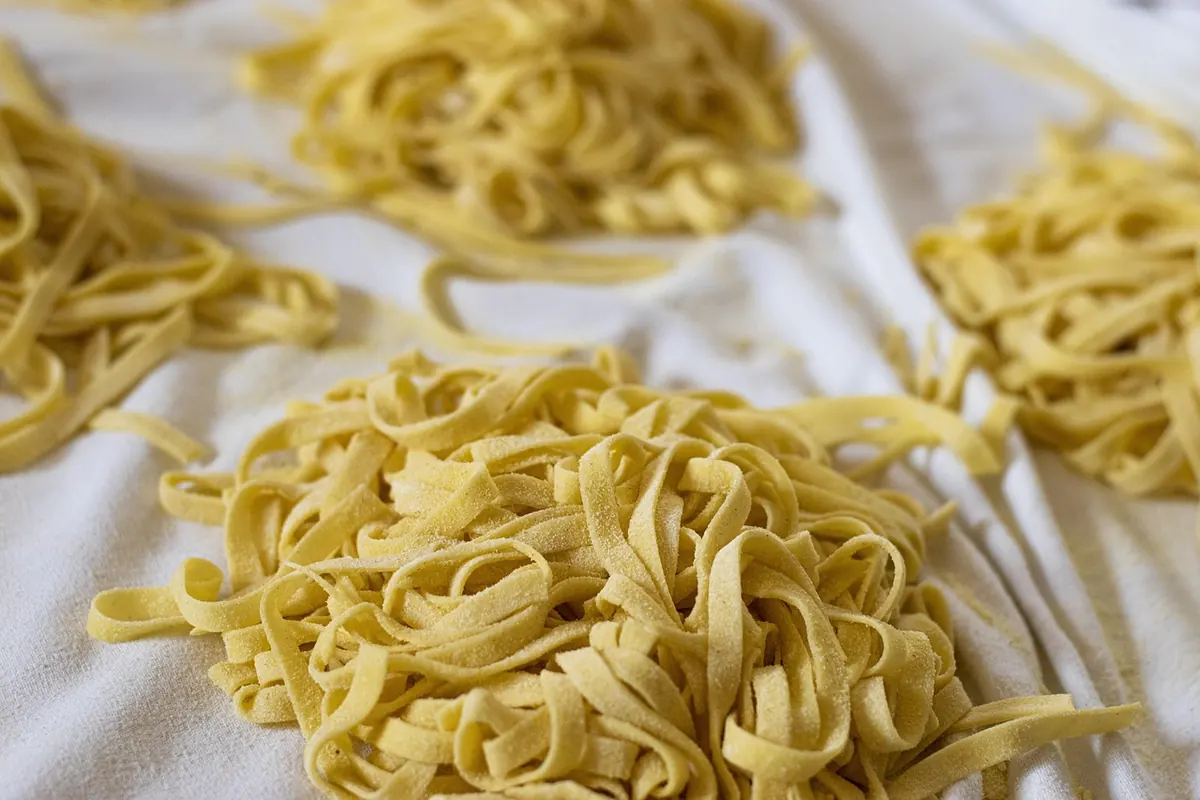
Abruzzo’s signature shape is spaghetti alla chitarra, cut on a wooden frame strung with wires. The dough is often made with durum flour and eggs, rolled into sheets, and pressed through the wires to make square-edged strands. The rough, porous surface is made for thick sauces. Maccheroni alla chitarra is the same idea in a short, hollow form.
Lamb ragù is the sauce to know here: slow-cooked lamb, tomato, and pecorino, with enough fat to coat the pasta. The square strands hold the sauce better than smooth spaghetti, and the egg in the dough gives them a little more structure. A simpler tomato sauce with chilli and garlic also works, especially in summer.
Chitarra pasta cooks quickly because it is fresh and thin. Stay close to the pot. Finish it in the sauce for a minute so the strands absorb flavor without going soft.
Regional names are useful, but the everyday skill is matching shape to sauce. Use this sequence when you are standing in the pantry with a pot of water coming to a boil.
Durum wheat pasta is forgiving, but it is not invisible. The shape should feel like part of the sauce, not a delivery vehicle. Buy shapes with rough surfaces, cook them just shy of soft, and let the region’s logic guide the pairing. That is the practical heart of Italian pasta culture: good wheat, a shape with a purpose, and a sauce that knows where to settle.
Photo: Mrdidg / Pixabay
A practical home storage guide to wheat berries and flour — moisture control, airtight containers, pest...
A practical look at how stone mills grind grain, why the flour comes out in so many particle sizes, and...
A same-day whole wheat focaccia with olive oil and rosemary — 80% hydration, folded rather than kneaded,...